English
 Español
Buyer’s Guide for Salons and Brand Teams
The Rotary Styling Comb: What Actually Matters
A rotating barrel, heated surface, and tensioned bristles replace half the tools on a styling shelf. Whether you are choosing for a salon or building a private-label line, these are the details that decide whether a rotary styling comb performs.
A rotary styling comb looks almost self-explanatory until you hold one. The barrel turns, the bristles lift a section of hair, heat shapes it, and the tool does the work your wrist would normally do. In seconds, a curl appears without the repeated wrapping motion of a curling wand.
That convenience is why rotary combs moved from salon shelves into retail and e-commerce listings. The category hides a wide quality gap. Some combs spin smoothly through thick hair for years. Others snag, slow down, or overheat within weeks. The difference never shows in product photos. It lives in the motor, the barrel coating, the heat control, and the manufacturing discipline behind the shell.
What Is a Rotary Styling Comb?
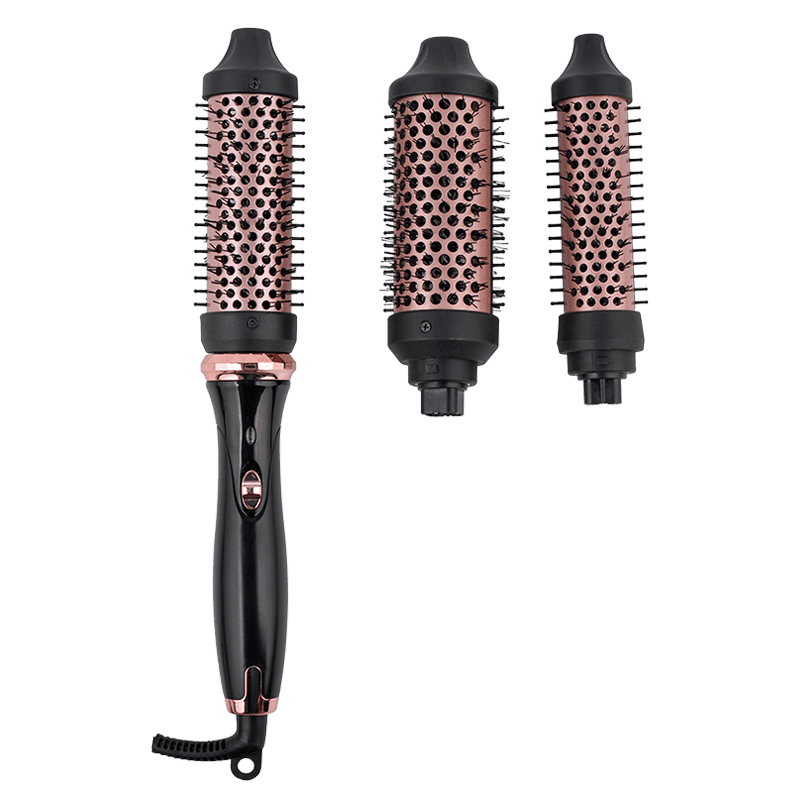
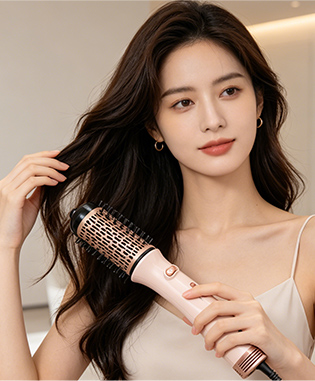
A rotary styling comb is a handheld device with a rotating barrel covered in bristles and an internal heating system. The rotation pulls hair taut against the heated surface, forming curls and waves without the wrist motion a traditional curling iron requires. Some models add airflow, so one tool can rough-dry, smooth, and shape hair in a single pass.
The styling result is softer and more natural than a small-barrel iron produces, and stylists finish faster with less hand movement. Buyers see three common configurations:
- Compact rotating combs, lightweight and built for quick curl refresh or travel.
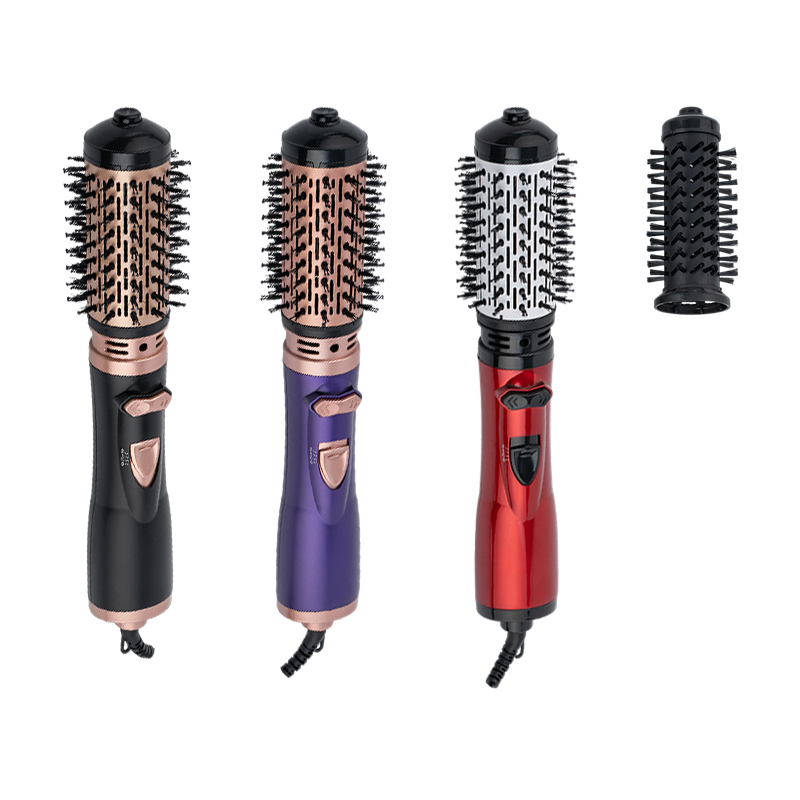
- Hot-air spin brushes, combining blow-dry airflow with rotating bristles for lift and volume.
- High-power rotary combs with denser bristles and wider barrels for thick or long hair.
That range appears across our rotary hair brush styler collection, from entry-level rotating combs to a complete all-in-one rotary styling comb for full routines.
Product reference MXN2025 All-in-One Rotating Styling Comb A complete-routine rotating comb designed for consistent tension and continuous rotation through long, dense hair.Core Components That Define Performance
Three internal elements decide how well a rotary styling comb performs: the motor, the barrel surface, and the temperature control. Looking at each separately makes comparison easier.
Motor and Rotation Quality
The motor must hold its speed while hair pulls against the bristles. Brushed motors lose torque under load, causing jerky rotation. Brushless motors, common in high-speed dryers, keep rotation consistent and last longer.
Two-way rotation matters too. The comb can curl hair away from the face on one side and toward it on the other without flipping the tool. Some models alternate direction automatically, creating mixed curls that look more natural.
Barrel Surface and Heat Delivery
The barrel transfers heat to the hair, and the surface material decides how evenly it is delivered. Bare aluminum heats fast but creates hot spots. Ceramic glaze spreads heat evenly and smooths the cuticle. Titanium heats quickly and stays light, while tourmaline adds negative ions to reduce static.
Ceramic glaze is the most common mid-range choice because it balances even heat, durability, and cost. Titanium or tourmaline surfaces support a professional-grade claim.
Product reference MXN181 High-Power Ceramic Glaze Rotary Comb A high-power rotary comb with a ceramic-glaze barrel for even heat distribution on thicker, resilient hair.Temperature Control and Range
Useful styling temperatures sit between 130°C and 200°C. Fine or color-treated hair needs the lower half; thick hair needs the top end. The tool must hold its temperature through the whole session instead of drifting downward between passes.
Digital temperature readouts are a reliable indicator of control quality. They are standard on advanced straighteners and increasingly common on rotary styling combs.
Airflow, Bristles, and the Styling Experience
Integrated Airflow
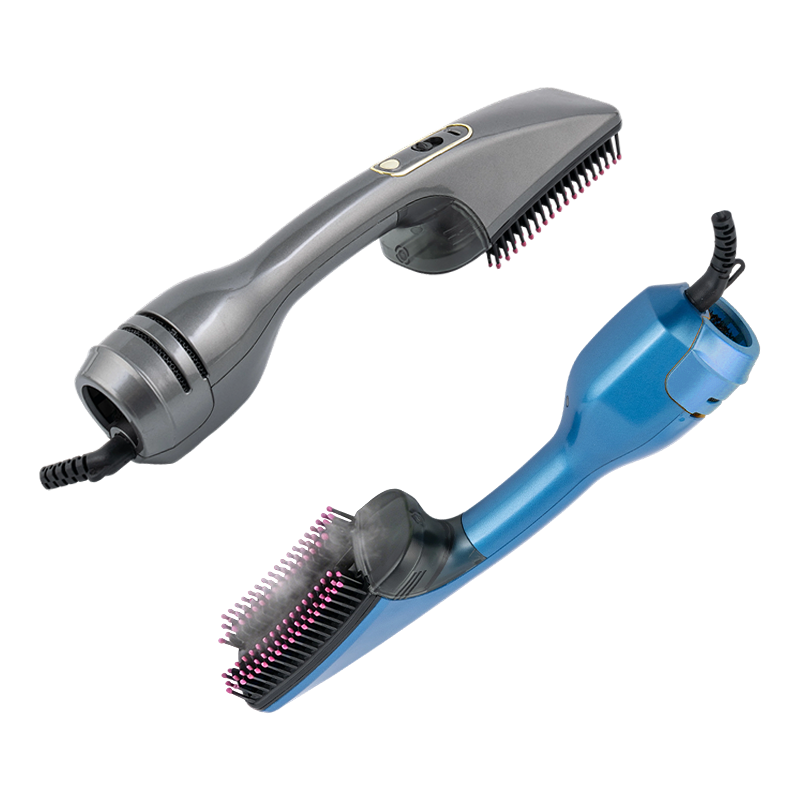
Airflow changes what a rotary styling comb can do. A built-in fan pre-heats the hair, adds root lift, and speeds up styling, so it works like a hot-air brush rather than a dry-heat iron. Three-in-one units combine blow-drying, rotating, and curling modes, replacing two or three separate appliances.
Product reference MXN121 3-in-1 Hot Air Spin Brush Styler Combines airflow, rotation, and heat in one body for lift, volume, and rapid curl setting.A rotary styling comb must feel right in the hand before it can work right on the hair. Balance, bristle tension, and barrel diameter decide whether a stylist reaches for it again.
Bristle and Barrel Geometry
Bristle stiffness controls grip. Fine hair needs softer bristles; coarse hair responds to denser, stiffer bristles that create stronger tension. Barrel diameter decides curl size: 20–25 mm gives tighter curls, while 30–35 mm produces loose waves.
Handle ergonomics matter most for professionals. Weight distribution, switch placement, and grip texture separate a well-engineered rotary comb from a generic one.
Safety and Certification: Non-Negotiable Checks
Hair tools run on mains power close to skin and hair, so safety is not optional. Every rotary styling comb should include:
- Automatic shut-off after a period of inactivity.
- Overheat protection in the heating circuit.
- Flame-retardant materials in the housing.
PTC heating elements reduce power automatically as temperature rises, lowering overheating risk considerably.
Export markets set their own compliance rules. CE and RoHS cover European sales; UL or ETL is often expected in North America; other regions have separate import standards. Confirm the factory can provide the relevant documents before committing to a private-label program.
Our industry news section also covers practical safety checks for other heat-styling appliances.
What OEM and Brand Buyers Should Evaluate
Sourcing a rotary comb for your own brand involves more than unit pricing. Start with engineering depth. A manufacturer that handles design, mold-making, and assembly in-house can adapt form, color, and branding without relying on generic shells.
Suppliers with experience across straighteners, curlers, steam products, and brushless dryers bring transferable manufacturing knowledge to a rotary comb program.
Evaluate the partner through a short qualification sequence:
- Shortlist two or three reference models that match your target hair types and price points.
- Test samples for rotation stability, heat consistency, and finish quality.
- Confirm customization: shell color, coatings, branding, packaging, and documentation.
- Clarify lead times, minimum order quantities, and quality resolution processes.
This checklist summarizes what matters when comparing rotary comb lines:
| Area | What to check | Why it matters |
|---|---|---|
| Motor | Brushless or brushed; speed stability under load | Consistent curls and longer service life |
| Barrel | Coating type; heat distribution test results | Even heat reduces damage and improves shine |
| Heat control | Thermostatic regulation; digital readout | Predictable results on different hair types |
| Safety | Overheat protection; auto shut-off | User safety and export compliance |
| Ergonomics | Handle balance; switch placement | Professional comfort during long sessions |
| Certification | CE, RoHS, UL, ETL and others by market | Customs clearance and retail acceptance |
A practical first step is to review the full rotary hair brush styler range, shortlist two or three models, and test them before commissioning a custom version.
The Bottom Line
A rotary styling comb looks simple, but its performance rests on engineering decisions that are invisible in product photos. Motor quality, barrel coating, temperature stability, bristle geometry, airflow, and safety certification combine in one tool that should deliver reliable results for years.
For individual buyers, the rule is simple: choose a model with a stable motor, even heating, and genuine protection, and match the barrel to your hair type. For brands, start from proven reference designs, verify them under real use, then customize the shell, coating, and packaging around a sound internal platform.
A rotary styling comb without temperature stability is a warranty case waiting to happen. Verify the heating system before scaling an order.
The rotary comb category keeps growing because it genuinely simplifies styling. A well-chosen tool saves time, protects hair, and justifies its shelf price. A well-built private-label version does the same for a brand’s reputation.